A ranch fence is only as good as what is holding it up, and North Texas ground is not kind to shortcuts. Much of the DFW region sits on expansive clay that swells when it rains and shrinks and cracks in an August drought. A post set too shallow gets heaved loose over a couple of wet-dry cycles, and then the whole run goes slack.
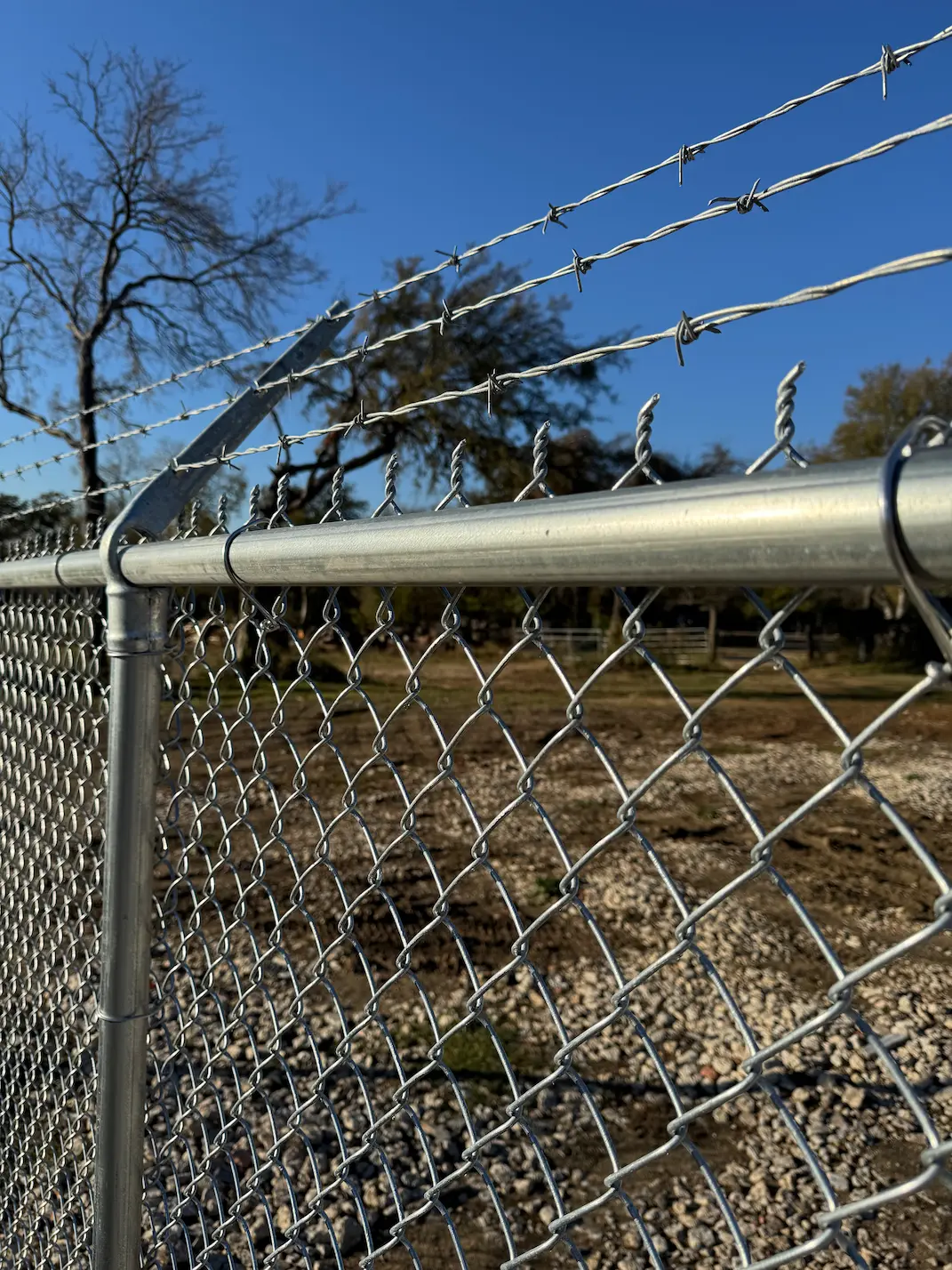
We set line posts deep enough to sit below that active zone, and set corner and brace posts deeper still, since those anchor the tension for the entire run. Game-fence and high-tension jobs get support posts down in the 5 to 6 foot range. Corners and gate ends are braced as H- or diagonal assemblies so a tensioned line cannot pull them out of plumb.
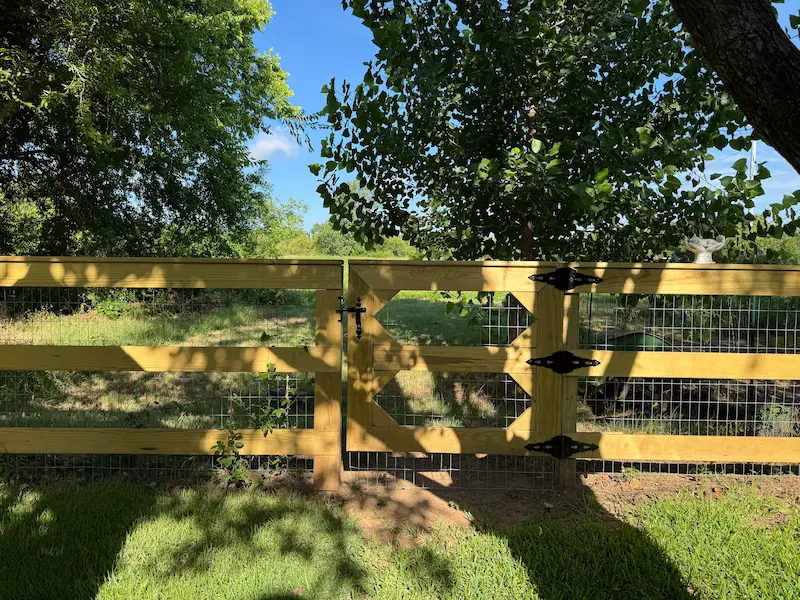
On pipe versus wood: Schedule 40 steel pipe is the long-haul choice, especially for horse and cattle rail and for corners that carry real load, and it laughs off the wet-dry clay cycle. Treated wood posts look right on a traditional rail fence, but they are the part that eventually rots at the groundline, so we spec them where the look calls for it and lean on steel where longevity matters most. Where the caliche or rock is genuinely hard, we bring the equipment to drill it rather than fight it with a shallow set.