
Dallas Fence Service
Fence Staining in Dallas, TX
Fence staining in Dallas, TX for cedar and pressure-treated wood fences. Careful preparation, color selection, and professional application.
- On-site fence evaluation
- Written preparation and finish scope
- Color and finish options reviewed
- Dallas BasedDallas, TX
- Built for Clay SoilSteel-post options
- Written Coverage5-year workmanship warranty
- Clear ScopeMeasured, itemized estimates
- 01
Inspect the Fence
Wood condition, previous finish, sun exposure, access, gates, and nearby surfaces are reviewed before the scope is written.
- 02
Plan the Preparation
Cleaning, repairs, drying conditions, masking, and product compatibility are matched to the actual fence.
- 03
Confirm the Finish
Included sides, stain direction, color options, protection work, and application scope are documented before scheduling.
Fence Staining in Dallas
Preparation, stain options, and timing that matter.
Compare surface condition, preparation, color, coverage, and maintenance before scheduling fence staining in Dallas.
Wood fences take the full force of Dallas sun, sudden rain, sprinkler overspray, and long dry stretches. Stain cannot replace sound construction, but it can help a good fence shed moisture, resist ultraviolet weathering, and keep a more even color.
Dallas Fence stains new and existing wood fences after inspecting the lumber, previous finish, access, and surrounding property. The estimate separates preparation from application so you know whether the fence needs a straightforward protective coat, deeper surface work, or repairs before staining makes sense.
Professional Fence Staining in Dallas
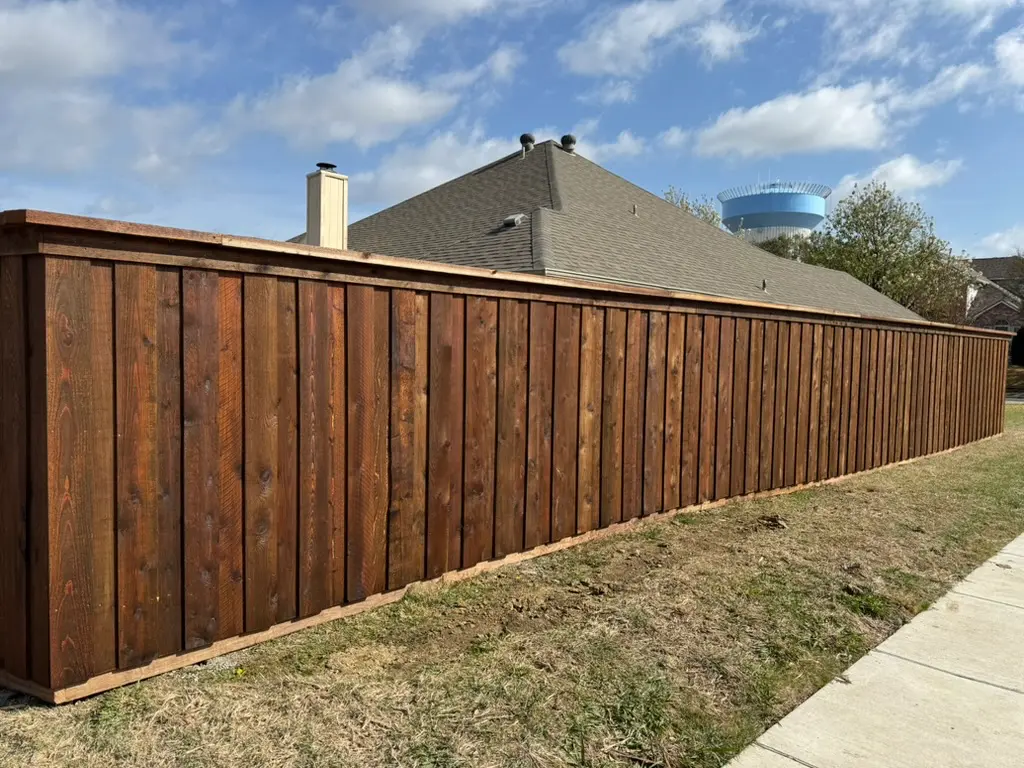
Fence staining is part appearance and part maintenance. A quality penetrating finish brings out the grain in cedar while reducing how quickly the wood takes on water and loses color under direct sun. The result should look intentional without hiding the character of the boards beneath a heavy surface film.
The right scope starts with the fence—not a one-size-fits-all package. We look at:
- The wood species and age
- Direct sun and shade exposure
- Existing stain, paint, or sealer
- Mildew, dirt, graying, and sprinkler residue
- Loose pickets, split rails, and damaged posts
- Access to both sides of the fence
- Landscaping, masonry, pools, metal hardware, and nearby structures
If the fence needs structural work, our Dallas fence repair service can address failing boards, posts, rails, and gates before the finish is applied. Staining over a loose or rotted section may improve the color, but it does not extend the life of failed lumber.
New Wood Fence Staining
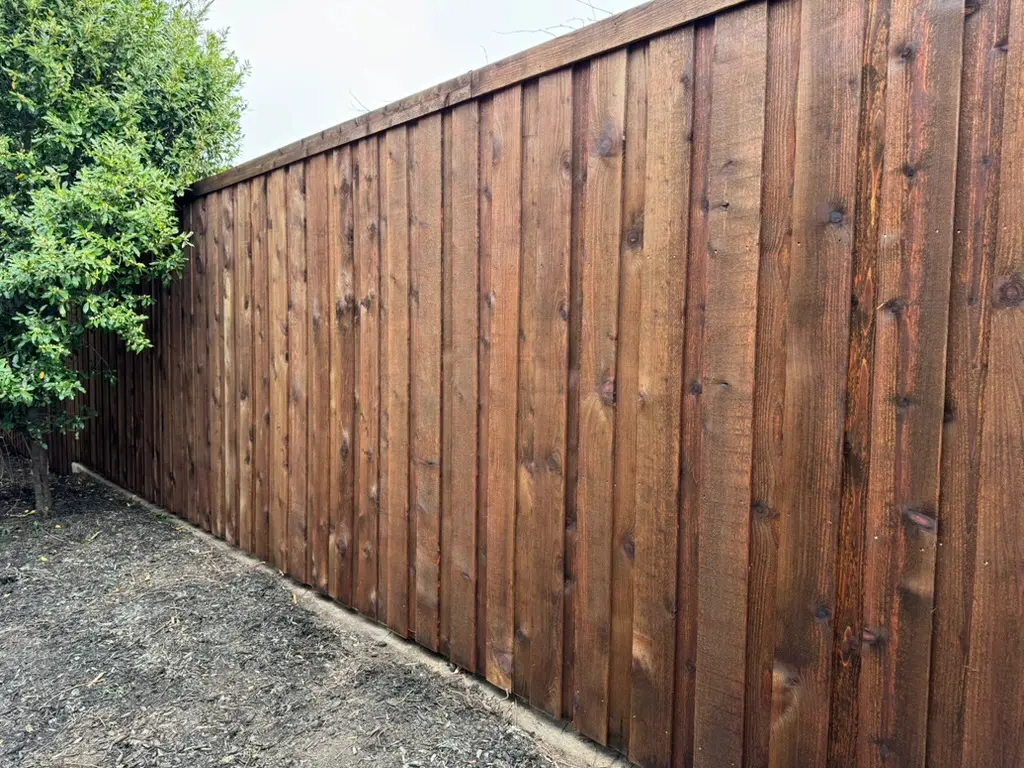
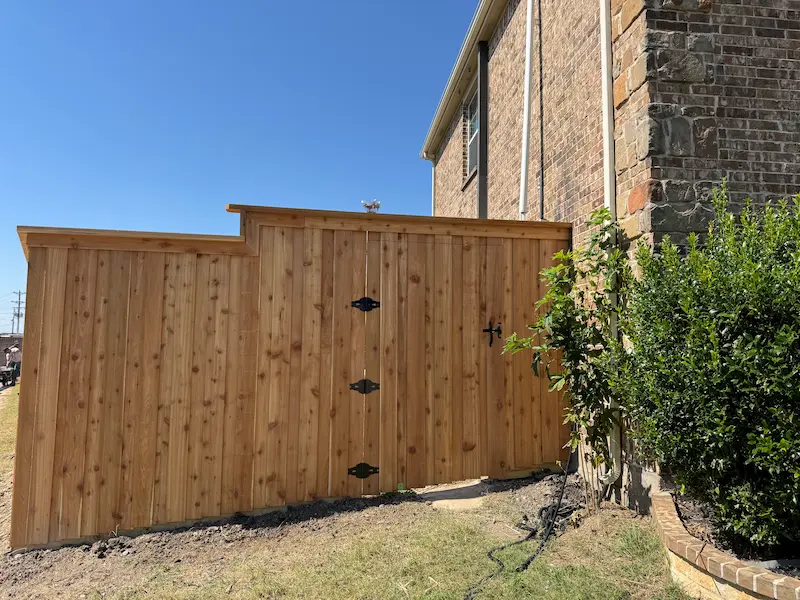
New cedar looks finished the day it is installed, but the lumber still needs time to acclimate and release moisture. Applying stain too soon can create uneven absorption, slow drying, and patchy color. Waiting too long leaves fresh wood exposed through a Dallas summer without protection.
The correct timing depends on the material and conditions. Western Red Cedar, pressure-treated pine, shaded sections, recent storms, and boards stored outdoors can all dry at different rates. Instead of promising a fixed number of days, we evaluate whether the wood is ready and follow the selected product's application requirements.
New-fence staining is a natural companion to wood fence installation in Dallas. The installation determines the structure; the finish helps protect the visible wood. Before staining, we also check for construction moisture, mill glaze, dirt from installation, concrete splash, pencil marks, and other surface conditions that can affect the final appearance.
Color samples matter on a new fence. Cedar varies from board to board, and the same stain can look different on pale sapwood, darker heartwood, rough-sawn pickets, and smooth trim. A small test area gives you a better decision than choosing from a printed color card alone.
Cleaning and Preparing a Fence for Stain
Most staining failures begin before the first coat. Dust, mildew, loose gray fibers, oil, old coatings, and mineral deposits can keep a stain from penetrating evenly. Preparation is therefore priced and planned as part of the work, not treated as an invisible extra after the crew arrives.
Depending on the fence, preparation may include:
- Inspecting the wood and documenting existing damage
- Identifying the previous finish and checking compatibility
- Protecting plants, masonry, metal, windows, and nearby surfaces
- Cleaning dirt, biological growth, and surface residue
- Allowing the wood to dry to the product's requirements
- Rechecking problem boards and testing the selected color
Pressure alone is not the goal. Too much pressure can raise the grain, cut grooves into cedar, and leave visible wand marks. The cleaning method should remove what interferes with the finish without trading one surface problem for another.
Painted fences and heavy film-forming coatings may require a different restoration scope than a fence previously treated with a penetrating stain. We identify that condition during the estimate because applying an incompatible product over an unknown coating is a shortcut that rarely ends well.
Oil-Based Fence Stain and Color Options
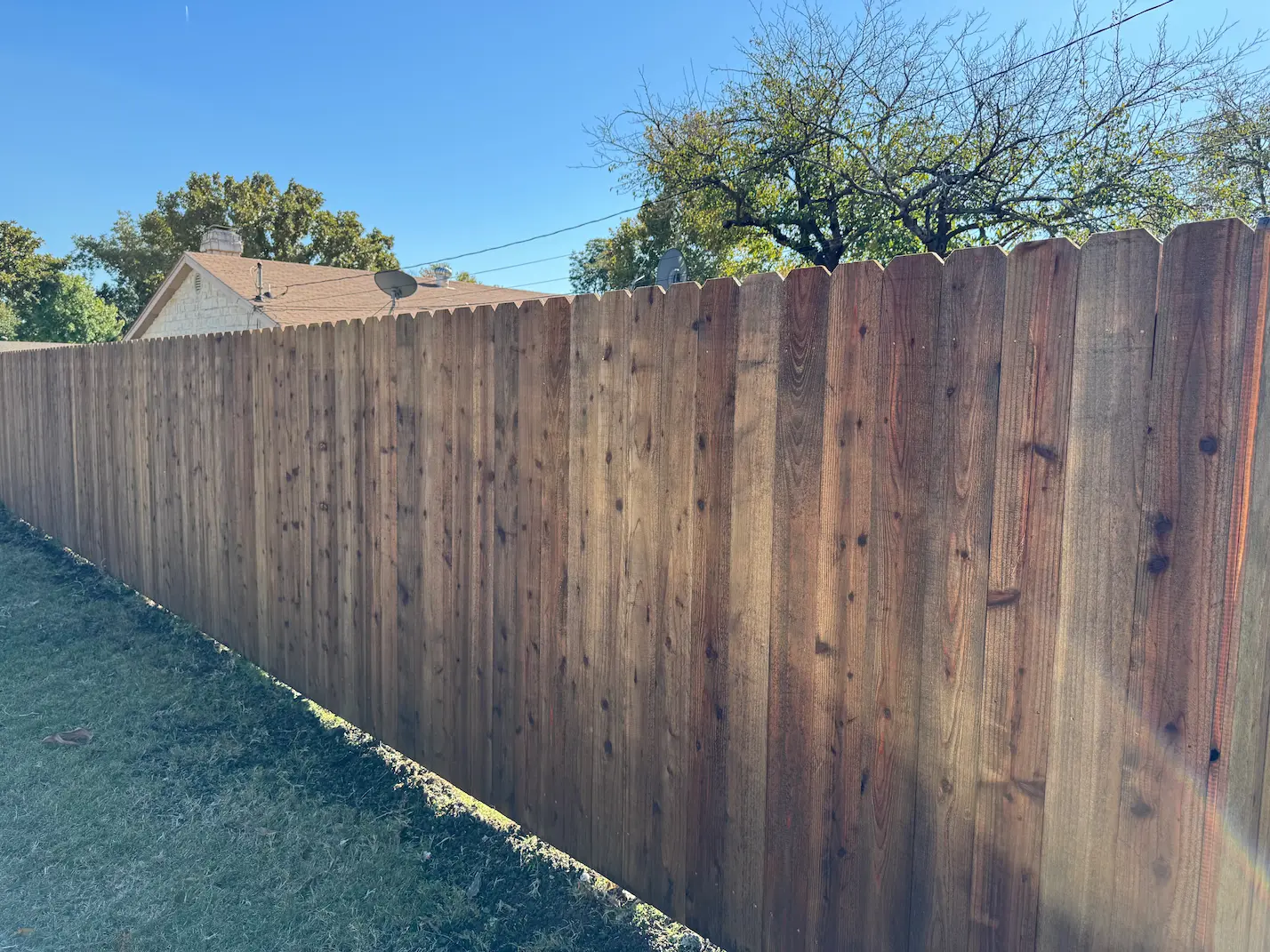
Penetrating oil-based stains are popular for Dallas cedar fences because they soak into the wood rather than building a thick coating on top. That makes future maintenance more manageable: the finish can weather gradually instead of cracking and peeling like a rigid film.
The best product still depends on the fence. An existing water-based coating, a previously painted surface, pressure-treated pine, and a brand-new rough-sawn cedar fence do not automatically receive the same system. Product compatibility, drying conditions, application temperature, and the manufacturer's instructions all belong in the decision.
Common color directions include:
- Natural cedar tones that warm the grain without making the fence look painted
- Medium brown finishes that create a richer, more uniform appearance
- Darker walnut tones for strong contrast against light brick or stone
- Transparent and semi-transparent options that preserve different amounts of visible grain
We recommend viewing a real sample on the actual fence whenever possible. Sun, shade, wood age, board texture, and neighboring materials change how a color reads. The goal is a finish that fits the home and can be maintained consistently—not a color selected under store lighting.
Restaining Weathered Cedar Fences
A weathered fence does not automatically need replacement. Gray color is often the result of ultraviolet exposure at the surface, while the boards underneath may remain sound. If the posts, rails, and pickets are structurally useful, cleaning and restaining can restore a more even appearance and renew protection.
Restaining begins with identifying the current finish. A penetrating stain that has worn thin is generally a different project from peeling paint or a heavy sealer. Uneven exposure also matters: the west-facing side may be dry and faded while the shaded side still holds color and moisture.
Before recommending stain, we look for:
- Rot or softness at the base of posts and pickets
- Split rails and fasteners pulling loose
- Warped or missing boards
- Mildew and chronic sprinkler exposure
- Peeling, flaking, or glossy previous coatings
- Sections that absorb water much faster than others
Minor repairs can be completed before surface preparation. When deterioration is widespread, we will explain whether staining is still a sensible investment or whether replacement should be compared. For a fence whose main purpose is backyard screening, see our privacy fence installation options as a reference point.
Fence Staining Cost Factors in Dallas
Fence staining is not priced accurately by color alone. Two fences with the same linear footage can require very different labor because of height, access, previous coatings, landscaping, gates, and surface condition.
The estimate considers:
- Length and height: Taller fences and cap-and-trim details create more surface area.
- One side or both: Shared lines and neighboring access determine what can be included.
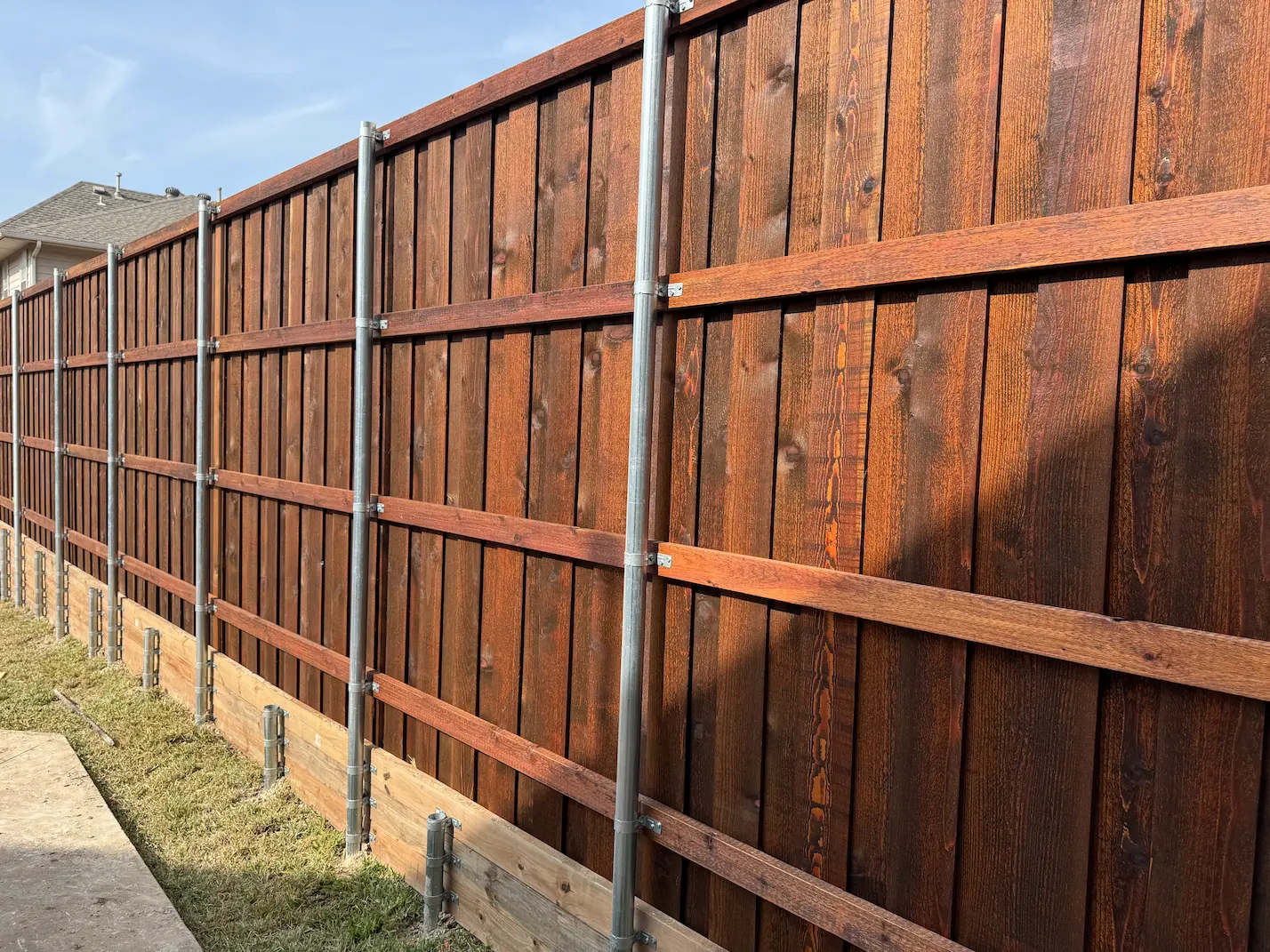
- Fence style: Board-on-board construction has overlapping faces, edges, trim, and more wood than side-by-side fencing.
- Preparation: New clean cedar needs less corrective work than a gray fence with mildew or a failing coating.
- Gates and hardware: Hinges, operators, latches, and metal frames require careful masking and hand work.
- Property protection: Pools, stone, brick, landscaping, vehicles, and adjacent buildings affect setup.
- Product and color: Coverage rates and application requirements vary by stain system and wood absorption.
The useful comparison is the full written scope: what will be cleaned, repaired, protected, stained, and excluded. A low per-foot number without preparation details can describe a very different job from a complete restoration.
Our Dallas Fence Staining Process
Our process is designed to make the finish and the scope predictable before application begins.
- Onsite evaluation: We inspect the fence, exposure, access, previous finish, landscaping, gates, and structural condition.
- Written staining scope: The estimate identifies included sides, preparation, product direction, color sampling, repairs, and protection work.
- Surface preparation: The fence is cleaned and prepared according to its condition, then allowed to dry as required.
- Color confirmation: We review how the selected finish is expected to read on the existing wood and confirm the product and color before application.
- Application: Stain is applied using methods appropriate to the product, fence profile, and surrounding property.
- Detail review: Gates, edges, caps, trim, transitions, and protected surfaces are checked before cleanup.
- Care guidance: We explain drying expectations and practical maintenance signs to watch over the next several seasons.
Weather is part of scheduling. Rain, high surface moisture, temperature, and drying conditions can move an application date because forcing the work into a bad window puts the finish at risk.
Ready to protect a new cedar fence or bring a weathered one back into shape? Request a fence staining estimate or call (469) 809-2424. We will inspect the fence and give you a written scope based on its actual condition.
Where we work
Fence Staining across the DFW metroplex
Explore every city and neighborhood guide in our current service area — outside this list? Ask about your address .
More from Dallas Fence
Explore our other fence services
One crew for every fence on your property. Whatever you're building next, we install it.
Before You Build
Fence Staining questions
Practical answers about planning fence staining in Dallas.
When should a new wood fence be stained?
A new fence should be stained after the wood is dry enough to absorb the product evenly. That can take several weeks, but weather, lumber species, treatment, shade, and recent rain all affect the timing. We inspect the fence and follow the stain manufacturer's surface and moisture requirements instead of relying on the calendar alone.
How often should a fence be restained in Dallas?
Many Dallas wood fences need attention every two to four years, but direct afternoon sun, sprinkler overspray, tree cover, stain type, and the condition of the previous coat can shorten or extend that interval. Fading alone is cosmetic; rapid water absorption, dry fibers, and uneven color are stronger signs that the protective finish is wearing thin.
Can an older gray fence be stained?
Often, yes. Weathered cedar can usually be cleaned and prepared for a new penetrating stain if the boards are still structurally sound. Stain will not repair rot, split rails, loose pickets, or failing posts, so we identify repair work before finishing the surface.
Do you clean the fence before staining?
Preparation depends on the fence. Dirt, mildew, loose fibers, old finish, and sprinkler residue can prevent even absorption, so the surface may need controlled cleaning and additional preparation before stain is applied. We avoid treating every fence with the same aggressive pressure because soft cedar can be scarred by improper washing.
Is oil-based or water-based stain better for a wood fence?
Both can work when the product fits the wood and the existing finish. Penetrating oil-based stains are common on cedar because they soak into the fibers and are easier to refresh without creating a thick film. Water-based products can offer different color and drying characteristics. We first determine what is already on the fence and whether the products are compatible.
Can you stain both sides of a fence?
Yes, when both sides are accessible and the property owner has permission to enter the adjoining area. Staining both faces gives the most consistent appearance and coverage, but gates, shared property lines, dense landscaping, pools, and neighboring structures can affect access and the final scope.
Does fence stain stop rot?
Stain helps slow moisture absorption and ultraviolet weathering, but it cannot make damaged lumber sound again. Rot at posts, rails, or picket bottoms needs repair or replacement. We recommend addressing structural problems before applying a finish so the stain protects wood that is worth preserving.
What affects the price of fence staining?
The main factors are fence length and height, whether one or both sides are included, wood condition, cleaning and preparation, previous coatings, color choice, gates, landscaping, access, and the amount of masking required. An onsite look produces a more useful number than a flat price based only on linear footage.
Free Fence Estimate
Price your fence staining on the actual site.
Start with a free on-site measure and a written scope. You will know what is proposed before installation is scheduled.