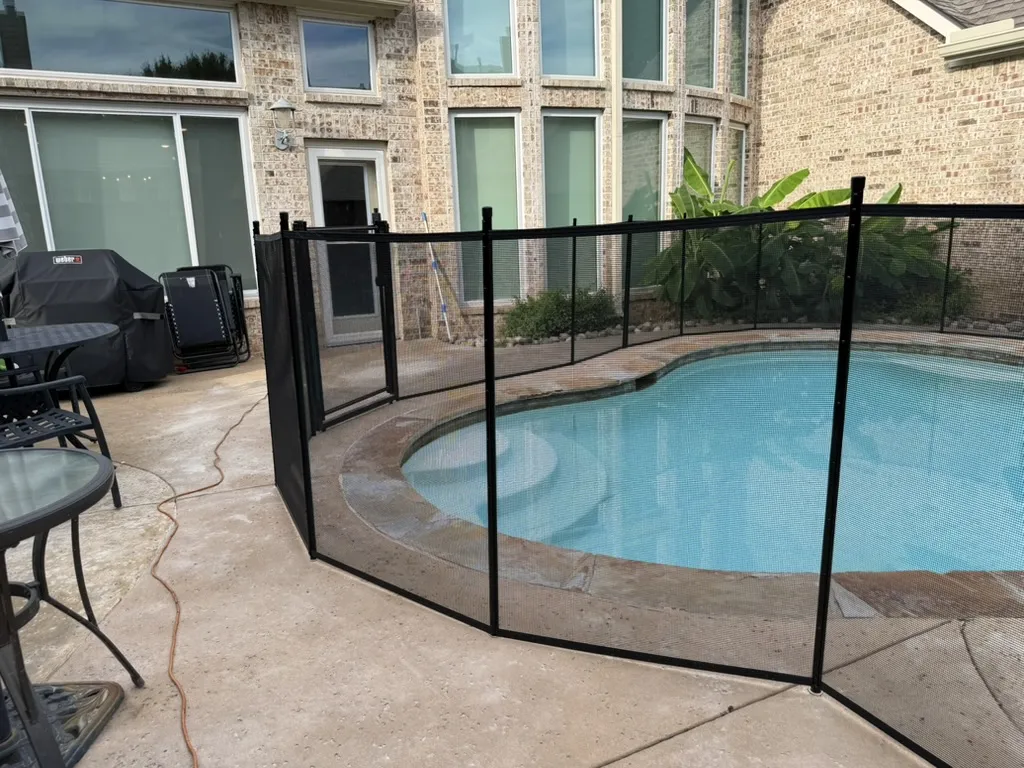
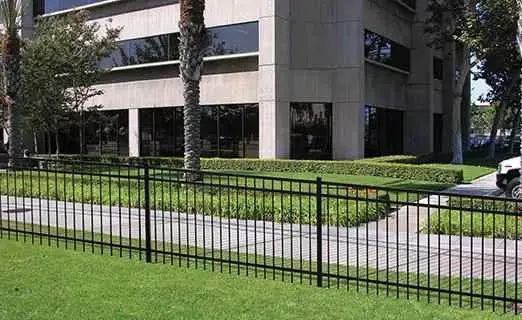
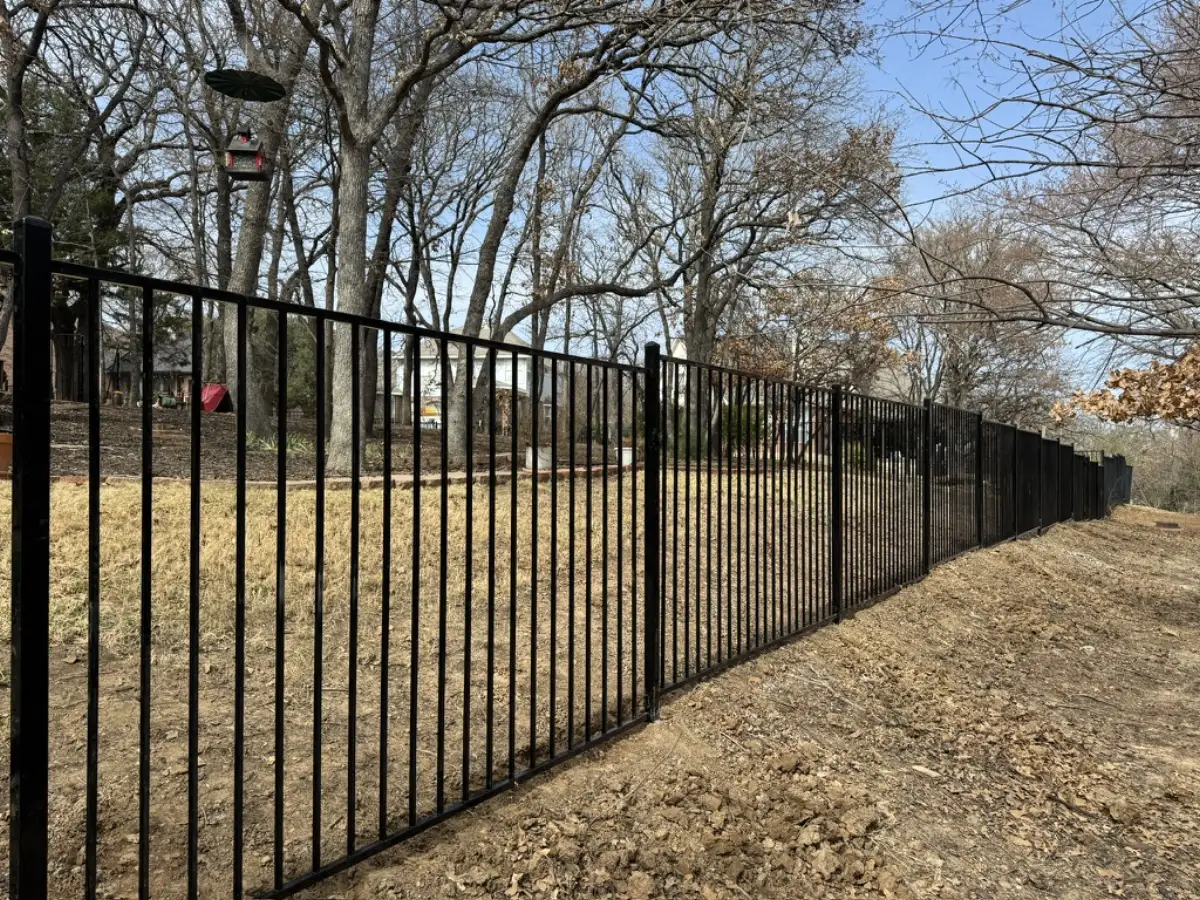
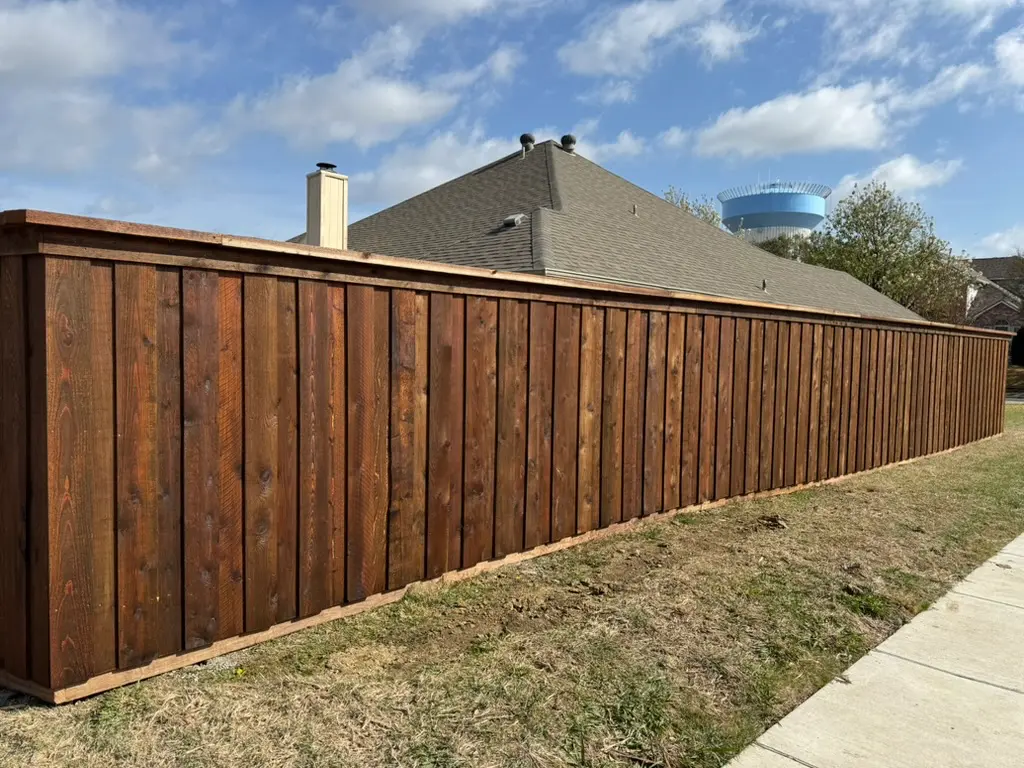
Pool fencing is one of the few corners of residential fencing that's genuinely regulated — at two levels.
State law. Texas Health & Safety Code Chapter 757, the Pool Yard Enclosures law, sets the statewide baseline: enclosures at least 48 inches tall measured from the side away from the pool, openings tight enough that a 4-inch sphere can't pass under or through the barrier, and nothing climbable — equipment, planters, structures — placed where it helps a child over. Chapter 757 directly governs multi-unit rental and HOA pools, but North Texas cities pattern their residential ordinances on the same requirements.
City code. Dallas and its suburbs require residential pool barriers at least 4 feet high with self-closing, self-latching gates and no gap a young child could squeeze through. The recurring inspection points:
- Minimum 48-inch height along the entire fence line
- No more than a 4-inch gap under the bottom rail or mesh border
- Gates that close and latch on their own from any open position
- Latch release mounted 54 inches up, or on the pool side, out of a child's reach
- Gates swinging outward, away from the pool
- No horizontal rails or footholds on the outside face
- If a house wall forms part of the barrier, doors into the pool area carry their own requirements
Exact rules vary city by city and can depend on when your pool was permitted — Highland Park and a 1990s Plano build won't be inspected identically. We confirm current requirements with your city before we build, pull the required pool-barrier permit, handle the inspection process, and guarantee compliance: every pool fence we install passes the first time. One more practical reason to get it right — most homeowner's insurance policies require a compliant pool barrier, and a failing one can put your coverage at risk or get a claim denied.